By Chibuike Njoku & Ndu Nwokolo
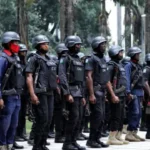
The deployment of police personnel to political elites and private individuals has become a defining feature of Nigeria’s security architecture and a growing source of public concern. With an estimated police strength of about 371,800 officers serving a population of over 236 million, the Nigeria Police Force (NPF) faces severe capacity constraints. Yet more than 100,000 officers are reportedly assigned to protect politicians and other Very Important Persons. Over time, this practice has entrenched a dual-tier security system in which personalised protection for the powerful takes precedence over general public safety. While such deployments are often justified as necessary for threat prevention, their scale and persistence have contributed to slow response times, uneven policing, and increased exposure of ordinary citizens to kidnapping, banditry, and violent crime.
As Nigeria approaches the 2027 general elections, police deployments have become an increasingly contentious issue. In principle, election security is intended to safeguard voters, electoral officials, and democratic processes. In practice, however, deployment patterns frequently reflect the interests of the political class rather than objective assessments of security needs. Senior politicians and office holders routinely enjoy extensive police escorts before, during, and after election periods, while many communities, polling units, and collation centres remain inadequately protected. This imbalance has heightened risks of violence, intimidation, and voter suppression, particularly in competitive or high-risk areas.
These patterns point to deeper challenges in Nigeria’s security governance. During past elections, visible police protection of political figures and private residences has contrasted sharply with a weak security presence at electoral flashpoints. Beyond electoral cycles, the concentration of police resources around elites exacerbates Nigeria’s wider insecurity. Many states already struggle with overstretched policing amid insurgency, communal violence, and organised crime. Diverting officers to personalised protection further limits the police’s capacity to respond to these threats and deepens perceptions of inequality before the law.
In this report, Nextier SPD Policy examines how entrenched practices of elite-focused police deployment undermine electoral integrity and public security. It outlines policy pathways for rebalancing election security toward transparency, neutrality, and the protection of democratic participation ahead of Nigeria’s 2027 elections.
Key Risks Ahead of the 2027 Elections
As Nigeria moves toward the 2027 general elections, several interconnected risks threaten to distort police deployments further and undermine election security. These risks stem not only from electoral competition itself, but also from broader political, security, and institutional pressures that are likely to intensify in the pre-election period.
One of the most prominent risks is heightened elite competition and intra-party fragmentation. The political landscape ahead of 2027 is marked by high-profile defections, internal party realignments, and struggles over candidacies, which observers warn could erode political plurality and tilt the electoral playing field toward the ruling party. Reports indicate that defections by key opposition figures and the incumbent party’s incentives may weaken the competitive balance and diminish public confidence in electoral fairness, thereby heightening incentives for partisan manipulation of security resources.
A second risk is the shrinking of civic and political space, especially for journalists, election observers, and civil society actors. Civil society organisations and traditional authorities have expressed deep concern that restrictions on civic engagement, intensified harassment of critics, and legal pressures on civic voices could be exacerbated during the pre-election period. Such dynamics risk creating an environment in which security deployments are used selectively to suppress dissent, discourage peaceful assembly, or limit monitoring activities, all of which are essential to transparent elections.
Third, Nigeria faces the risk of overstretched and uneven police capacity. Multiple security demands, including banditry, insurgency, communal violence, and urban crime, already burden the Nigeria Police Force. Election periods place additional strain on limited personnel, logistics, and funding. When a significant portion of available officers is assigned to protect political elites, fewer resources remain for securing polling units, electoral officials, and vulnerable communities. This imbalance increases the likelihood of security gaps, delayed incident responses, and inconsistent enforcement of electoral laws.
Another significant risk is the continued perception of police partiality. Public trust in security institutions remains fragile, shaped by past experiences of selective enforcement and political interference. If police deployments ahead of 2027 continue to favour the political class, citizens may interpret thesecurity presence as coercive rather than protective. This perception can discourage voter turnout, especially among youth and marginalised groups, and increase the likelihood of confrontation between security forces and civilians.
There is also the risk of escalating election-related violence in flashpoint areas. Competition over state power, economic resources, and local authority often turns violent in contexts where security responses are inconsistent or politicised. Inadequate or biased deployments may embolden political thugs, militias, or criminal networks, while excessive force by security agencies can trigger protests and reprisals. Both dynamics threaten the safety of voters and electoral officials.
Finally, weak oversight and accountability mechanisms remain a critical risk factor. Without transparent deployment criteria, clear rules of engagement, and effective sanctions for abuse, problematic practices are likely to persist. The absence of timely accountability sends a signal that misuse of police resources during elections carries little consequence.
Together, these risks suggest that, without deliberate reforms, the 2027 elections may replicate or intensify past patterns in which police deployments protect power rather than participation. Addressing these risks is therefore essential to ensuring that election security supports democratic choice rather than undermines it.
Recommendations
Addressing the misuse of police deployments ahead of Nigeria’s 2027 elections requires targeted reforms that reinforce neutrality, accountability, and public confidence in election security without undermining legitimate protection needs. The following recommendations are tailored to key institutions responsible for electoral security governance.
i. Establish Clear and Publicly Available Deployment Guidelines: The Federal Government, through the Ministry of Police Affairs, should mandate the Nigeria Police Force (NPF) to develop and publicly issue binding election-security deployment guidelines ahead of the 2027 elections. These guidelines should prioritise deployments to polling units, collation centres, INEC facilities, and identified electoral flashpoints. Define strict and transparent conditions under which politicians and senior officials may receive police escorts during election periods. Explicitly prohibit the use of police personnel for campaign activities, voter intimidation, movement restrictions, or partisan enforcement.
ii. Restrict and Rationalise Police Protection for Political Office Holders: The NPF should review and significantly reduce the number of officers assigned to political office holders during election periods. Temporary caps should be introduced, with exemptions granted only based on documented, independent threat assessments approved through institutional channels, rather than on political requests.
iii. Strengthen Inter-Agency Coordination Under INEC Leadership: INEC should be empowered to play a more assertive coordinating role through the Inter-Agency Consultative Committee on Election Security (ICCES). Specifically, ICCES should be granted enhanced operational authority to review and approve election-period security deployment plans and to monitor compliance with agreed deployment guidelines. Rapidly intervene when credible reports of partisan or abusive security conduct emerge.
iv. Enhance Oversight, Monitoring, and Accountability Mechanisms: The National Human Rights Commission, civil society organisations, and accredited election observers should be formally integrated into election security monitoring. Precise complaint mechanisms,hotlines, rapid investigation teams, and post-election reviews should be established to document abuses and recommend sanctions. Officers found to have engaged in partisan enforcement or rights violations should face timely disciplinary action.
v. Invest in Police Professionalism and Election-Specific Training: The NPF should institutionalise mandatory pre-election training for all officers deployed during elections. Training modules should focus on Human rights standards and the lawful use of force; political neutrality and non-partisanship; and Crowd management, de-escalation, and civilian protection.
vi. Engage Civil Society and the Media as Accountability Partners: Civil society organisations and the media should be granted unhindered access to observe election security operations at polling and collation centres. Their reporting can complement official monitoring mechanisms, provide early warning of emerging risks, and enhance public confidence through independent scrutiny.
Conclusion
As Nigeria approaches the 2027 general elections, this policy brief highlights a critical challenge in the country’s security and democratic governance: the persistent prioritisation of police r capacity and rising insecurity nationwide, the continued diversion of officers to personalised protection has become a systemic risk to the credibility of elections and public trust. The analysis shows that elite-focused police deployments weaken security at polling units and electoral flashpoints, reinforce perceptions of police partiality, and create conditions that enable intimidation, voter suppression, and election-related violence. These dynamics undermine confidence in the Nigeria Police Force’s neutrality and deepen perceptions of inequality before the law, particularly among opposition supporters, youth, and marginalised communities. If left unaddressed, such practices risk entrenching a cycle in which elections are procedurally conducted but substantively compromised by coercive security arrangements. This brief does not call for reduced election security, but rather for a strategic rebalancing of police deployments to protect voters, electoral officials, and democratic processes. Clear deployment guidelines, stronger inter-agency coordination under INEC, enhanced oversight, and improved police professionalism provide practical pathways for reform. The decisions taken ahead of 2027 will be decisive in determining whether election security strengthens democratic participation or continues to serve political privilege at the expense of public confidence and safety.
*{Dr. Chibuike Njoku is an Associate Consultant at Nextier, a Senior Research Fellow at the Institute of Advanced Studies, Ile-Ife, and a Senior Research Fellow at the Institut Français de Recherche en Afrique (IFRA-Nigeria) while Dr Ndu Nwokolo is a Managing Partner at Nextier and an Honorary Fellow at the School of Government at the University of Birmingham, UK.}